Comments: very late variety, self-fertile, the late season variety for direct marketing
Malwina is an unusual variety, with a late cropping season starting towards the end of June. The plant is very robust and vigorous, with mid-sized, glossy, dark green leaves. The flowers are contained within the foliage. The short stems mean it is less easy to pick than other varieties.
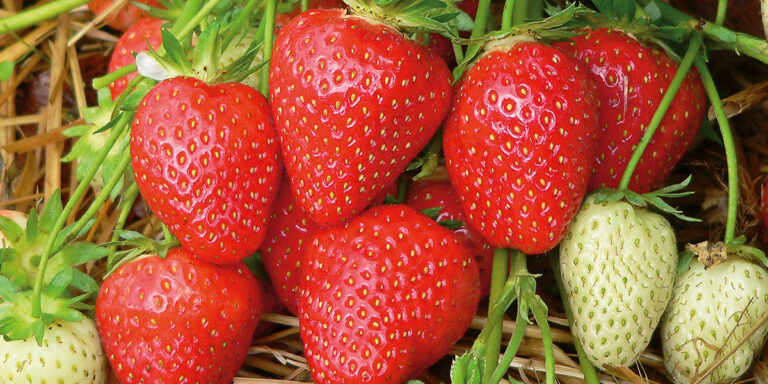
The berries are large, firm, medium red and glossy with red flesh. Flavour for pale-picked berries (wholesale) is good, for fully ripe-picked berries (very dark red) very good.
Depending on climate and soil, outdoor crops should not be overfertilised (excess leaf growth can result in a significant reduction in picking performance). Phyllody occurs in around 3% of the berries.
Malwina is winter hardy and relatively disease resistant. It is verticillium tolerant, resistant to fruit rots and rarely suffers from mildew.
Advantages of Malwina:
– very late ripening period
– self fertilizing
– very good taste
– appealing fruit
– tolerant for Verticillium
Important:
– removing the flower trusses is necessary if
the plant was planted late
– if the planting date was too late no
blossoms will be induced
– no gap of the harvest due to cultivation of
other late season varieties
– special crop protection necessary against
thrips and anthonomus rubi [strawberry
blossom]!)
– sensitive to Phytophthora cactorum. Crop
protection with phosphorus acid recom-
mended
– protected variety, head license: Peter Stoppel, Germany